

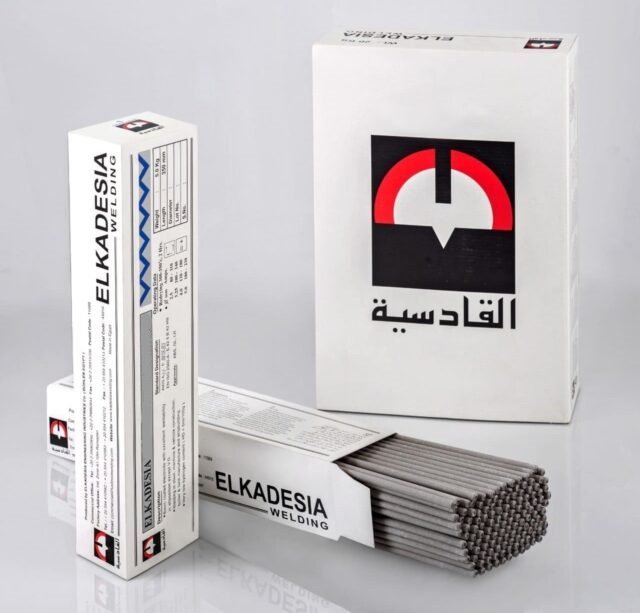
Material Type Alloy Components
High Nickel, Chromium and manganese ,and Other element (Nb) .
Weld Deposit Characteristics
A low hydrogen type covered electrode containing High Ni, Cr, and Mn, Nb. The welding is suitable for all positions with good heat resistance, oxidizations resistance and good corrosion resistance. It produces toughness under low temperature.
Weld Deposit Properties
Recommended Application
used for welding of nickel-chromium-iron alloys to themselves, and for dissimilar welding between nickel-chromium-iron alloys and steels or stainless steels. The applications include surfacing as well as clad-side welding.
Standard Sizes
Diameter: 2.5/3.25/4.0/5.0 mm
Packing : 5.0 Kg Packages – 2.0 Kg Vacuum Package
Operating Data
Welding Positions
- All Positions Except Vertical Down
Polarity
- DC (+)
Notes on usage:
Be sure to clean up the contaminations on the base metal, groove and pass to pass with stainless steel brush. Dry the electrodes at 350-400℃ for 60 minutes before using. Take out a batch of half day consumption and keep at 100-150℃ during welding process. Use back-step method to prevent arc starting from blowholes and hold for 3-5 seconds at every end—up. Maintain short arc length to prevent porosity problem. Do not exceed the range of recommended current. Over heat input might decrease the impact value.
We do hereby certify that; the weld metal deposit, has been tested, mechanically and chemically and all results are comply with the requirements of specifications of Elkadesia for engineering industries and the Specification of ASME II part C SFA 5.01 Class C5 and level of tests in J or 5.